
Recent work
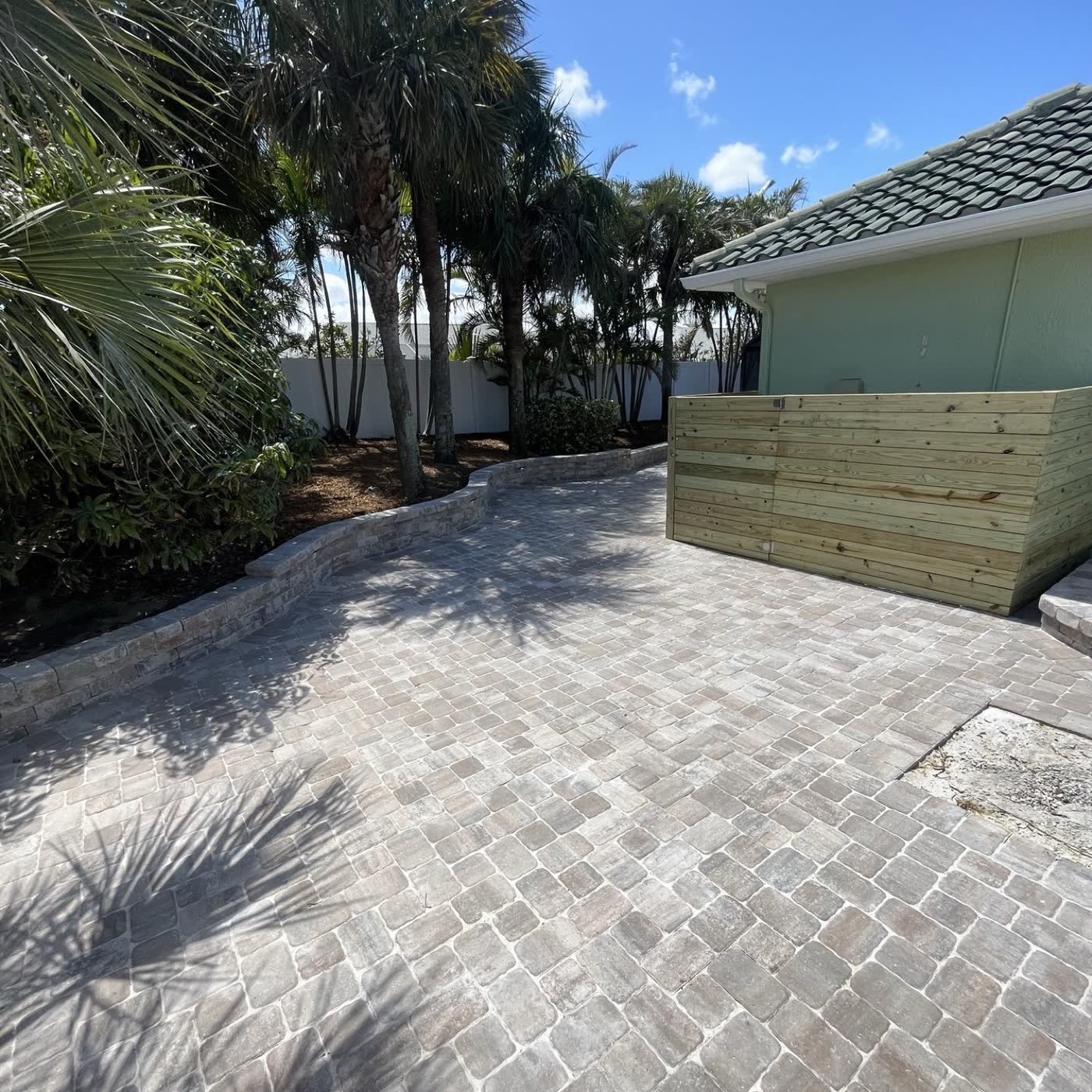
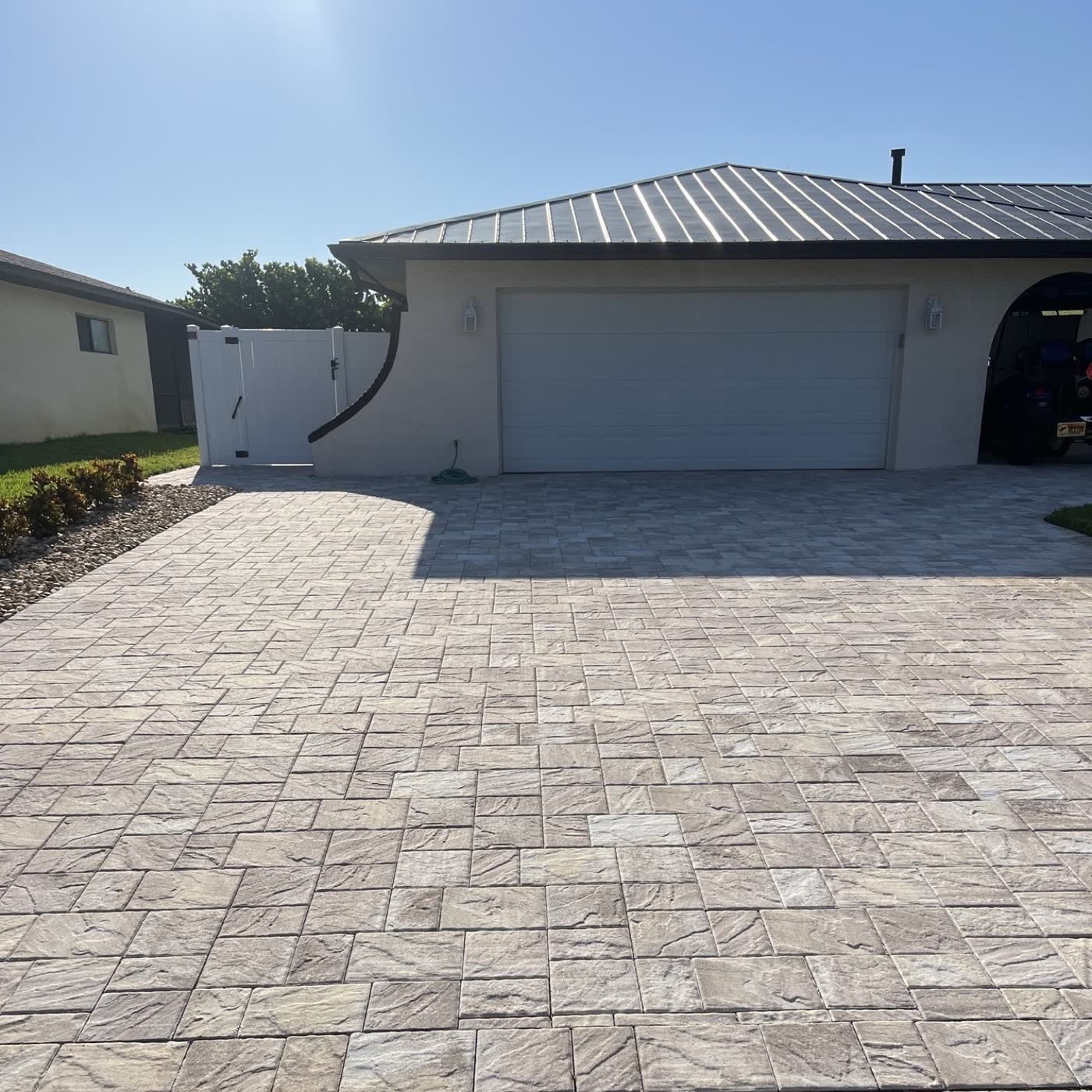
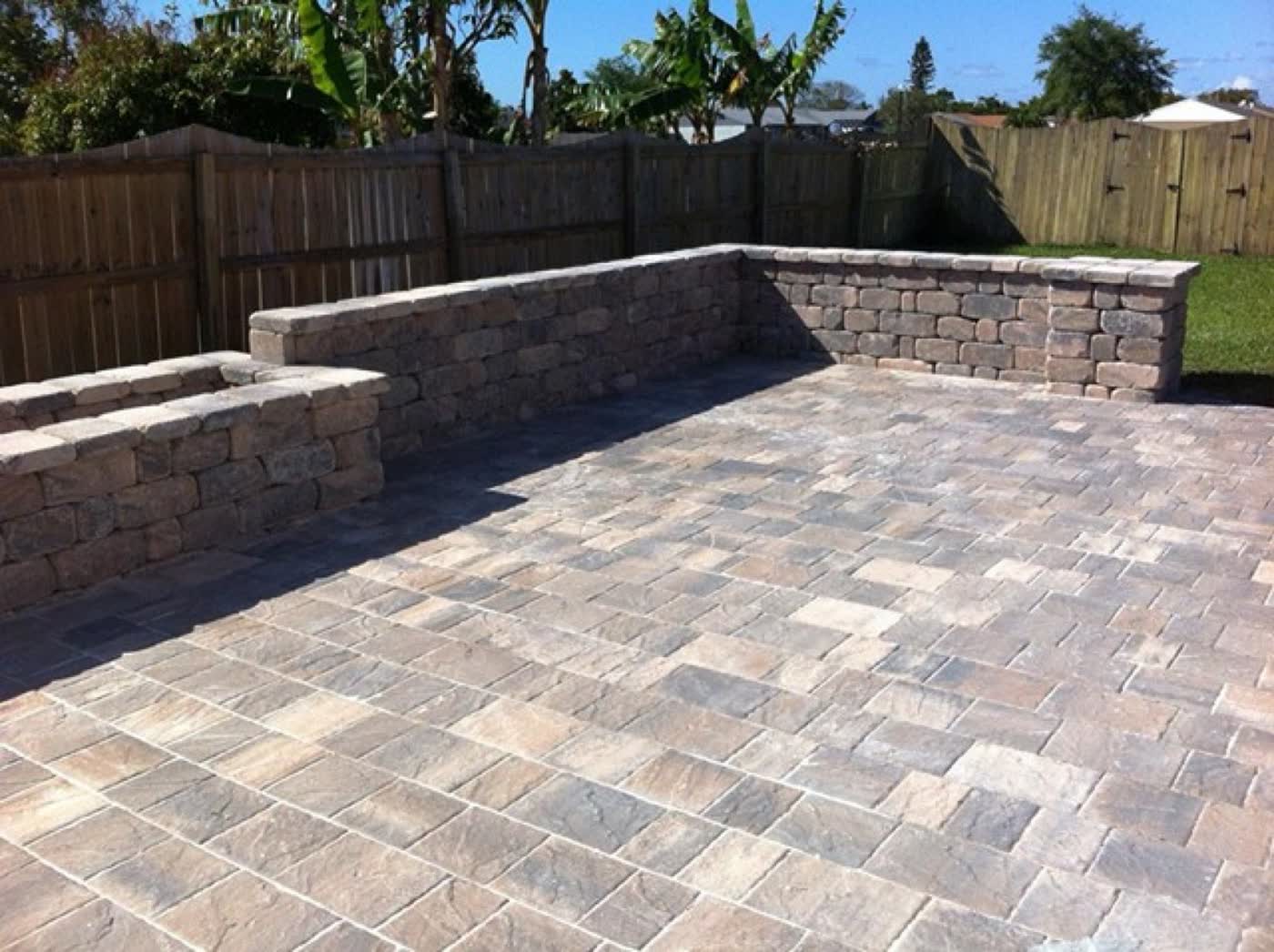
Installs, fresh out of the ground.
Drag or swipe to browse · tap a photo to open it
What's actually under your pavers
The seven layers that decide whether it lasts.
This is published industry practice from ICPI, the interlocking concrete pavement institute. You can check any bid against it — including ours.
1. Excavation to the right depth
How deep depends on what's going on top. Pedestrian patios and walkways need less than a driveway that will carry vehicles, and soft or organic soil has to come out rather than get compacted in place.
- Depth is set by use and by what the soil is
- Soft spots get removed, not buried
2. A compacted subgrade
The soil under the base gets compacted before any aggregate goes down. Skip it and you have built a good base on top of something that's still going to move.
- Compacted before base material arrives
3. Geotextile where it's needed
A separation fabric between subgrade and base keeps fine soil from pumping up into the aggregate over time. On Brevard's sandy and variable subgrades this is cheap insurance, not an upsell.
- Keeps base and soil from mixing
- Matters most on soft or silty ground
4. Base aggregate, compacted in lifts
The base is the structure. It goes in and gets compacted in layers — not dumped to full depth and rolled once, which leaves the bottom half loose. Depth is greater for driveways than for patios.
- Compacted in lifts, not all at once
- Driveways get more base than patios
5. About an inch of bedding sand — and only about an inch
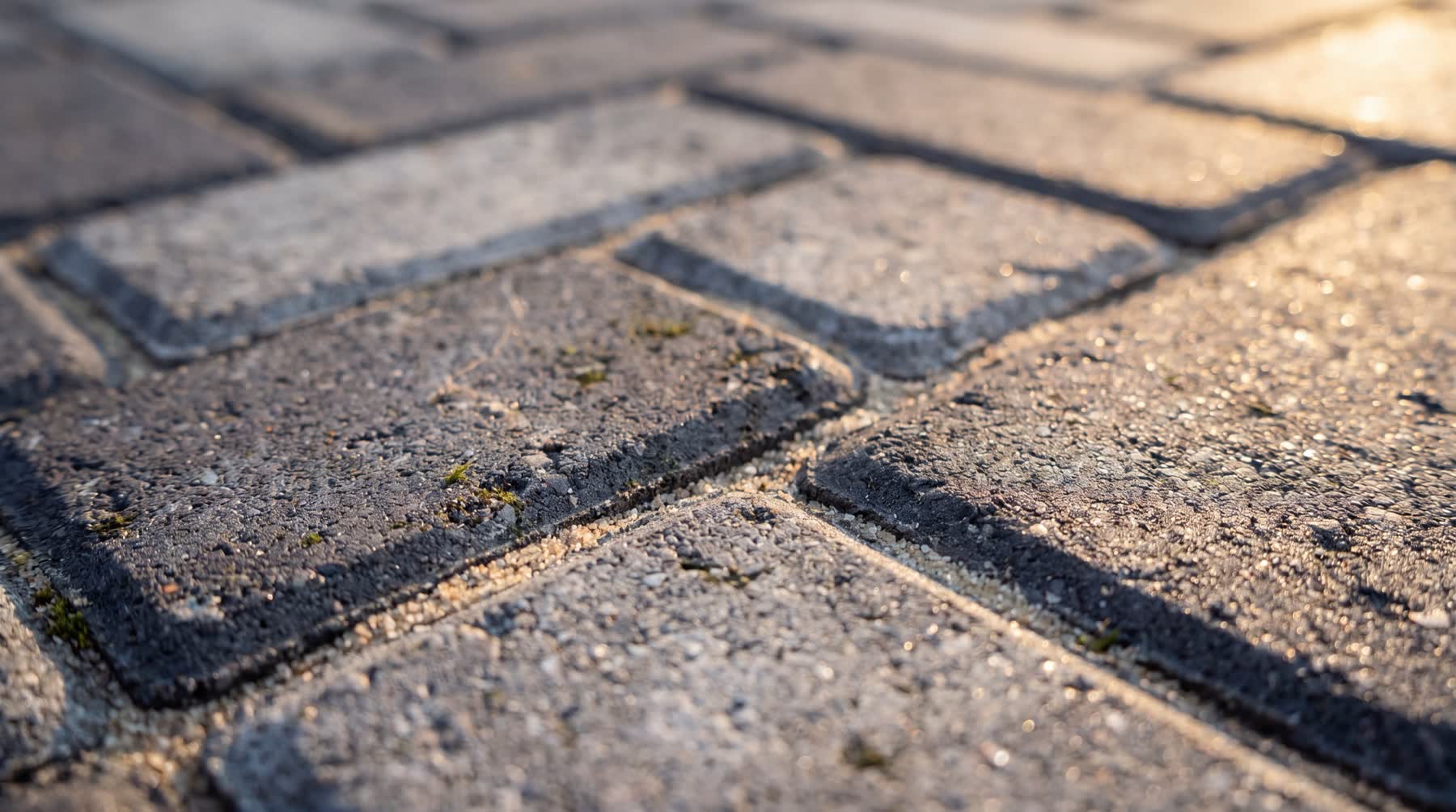
ICPI is explicit that bedding sand is a thin, screeded, uniform layer and is not to be used to fix grade. A thick sand layer is the fastest way to lay pavers and the most common cause of a surface that goes lumpy a year later, because deep sand consolidates unevenly under load.
- Screeded uniform, never used to level a bad base
- Thick bedding sand is the classic shortcut
6. Edge restraint fastened to the base
The restraint that holds your perimeter has to be mounted on the compacted base — not on the bedding sand. This is the single easiest thing for a homeowner to ask about, and the answer tells you a lot.
- Mounted to base, not to sand
- Without it the edges migrate and the field opens
7. Joint sand, then compaction
Pavers get compacted into the bedding layer and the joints filled and set. Filled joints are structural — interlock is what lets the surface spread a load sideways instead of taking it one paver at a time.
- Joints filled and set, not left open
- Interlock is what makes it a pavement
Not all the same build
A driveway is not a thick patio.
Three different loads, three different builds. If a bid prices them the same way, ask why.
| Patio / walkway | Driveway | Pool deck | |
|---|---|---|---|
| Carries | People and furniture | Vehicles, repeatedly | People, wet and barefoot |
| Base | Least depth of the three | Deepest — it takes the load | Depth plus drainage planning |
| Pattern | Aesthetic choice is open | Herringbone, for interlock | Aesthetic, but slip matters |
| Biggest risk | Settling at edges | Rutting in the wheel tracks | Slippery finish, standing water |
| Drainage | Fall away from the house | Fall to a planned outlet | Fall away from the pool shell |
Ask any contractor what base depth they're quoting for your specific use, and whether it changes between your patio and your driveway. It should.
Free estimate
Not sure what your yard needs?
That's what the walkthrough is for. We'll look at the space, the drainage and the access, and tell you what it actually takes.
Why the pattern changes
Your driveway gets herringbone. Your patio might not.
It looks like a style choice. On a driveway it's structural.
- Herringbone wedges every paver against its neighbours in two directions at once
- That interlock is what resists the twisting force of a car turning its wheels
- Running bond and stack patterns have continuous straight joints that can creep under vehicle load
- On a patio, where the load is people and furniture, the pattern really is your choice
- Which is why we'll steer you to herringbone on a driveway and open the catalogue on a patio
- 45° or 90° herringbone both interlock — the difference there is how it meets your edges
If a driveway bid has a stack-bond pattern in it, that's worth a question.
Straight talk
The five ways a paver job fails.
Every one of them traces back to a step somebody skipped underneath.
| What you see | What actually caused it | The step that prevents it |
|---|---|---|
| Sinking and low spots | Base too shallow, or compacted in one pass instead of lifts | Correct depth, compacted in layers |
| A lumpy, wavy surface | Thick bedding sand used to level a bad base | Thin screeded bedding, level base underneath |
| Edges creeping and opening | Edge restraint set on sand, or missing | Restraint fastened to the compacted base |
| Weeds and ants in the joints | Joints never properly filled or maintained | Joints filled and set, then re-sanded on a cycle |
| Standing water, or water at the house | No planned fall and no outlet | Slope designed before excavation |
Use this on us too
Six questions to ask anyone bidding your job.
A contractor who's building it right will enjoy these questions. One who isn't isn't going to like them.
- How deep is the base, and is it different for my driveway than my patio?
- Do you compact the base in lifts, and how many?
- How thick is the bedding sand layer?
- Is the edge restraint fastened to the base or set in the sand?
- Where does the water go when it rains, and where does it end up?
- What does my municipality require for this, and who pulls it?
Ask us these on the walkthrough and we'll answer them in front of you.
Questions
Paver questions, answered straight.
How long does a paver patio last?
A properly built paver surface is designed to be a long-term installation, and individual pavers can be lifted and reset if something ever needs attention — which is a genuine advantage over poured concrete. The lifespan is set by the base, not by the pavers.
Can you build over my existing concrete?
Sometimes, depending on the condition and the elevation it leaves you at — overlaying raises the surface, which affects door thresholds, steps and drainage. We'll look and tell you honestly whether an overlay or a tear-out is the better call for your situation.
What about tree roots?
Roots near the area get discussed before we dig. Building over a root that's going to grow is a future heave, so the answer is either routing around it, root pruning where the tree can take it, or moving the layout.
Do pavers get hot?
Lighter colors run cooler than dark ones, which is worth knowing for a pool deck you'll walk on barefoot. We'll show you samples in the sun, not just in a brochure.
Will weeds come up through them?
Weeds in a paver surface almost always grow in the joints from seed that lands on top, not up from below. Properly filled joints and periodic re-sanding are what keep it under control.
What we build
Paver projects, one page each.
Driveway pavers
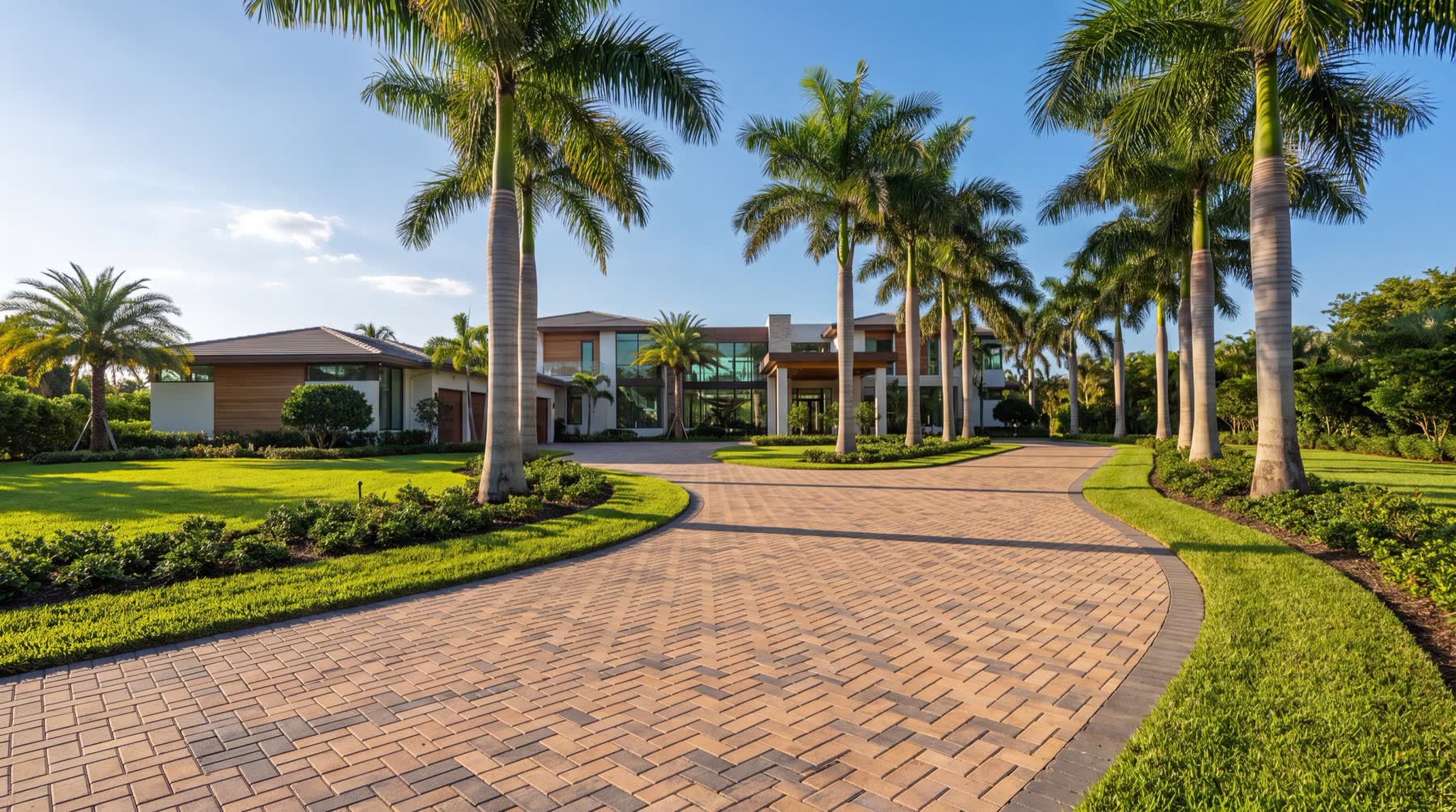
A driveway works harder than any other paver surface — vehicle weight, full sun, oil drips, sprinkler overspray at the apron.
See how we build itPool deck pavers
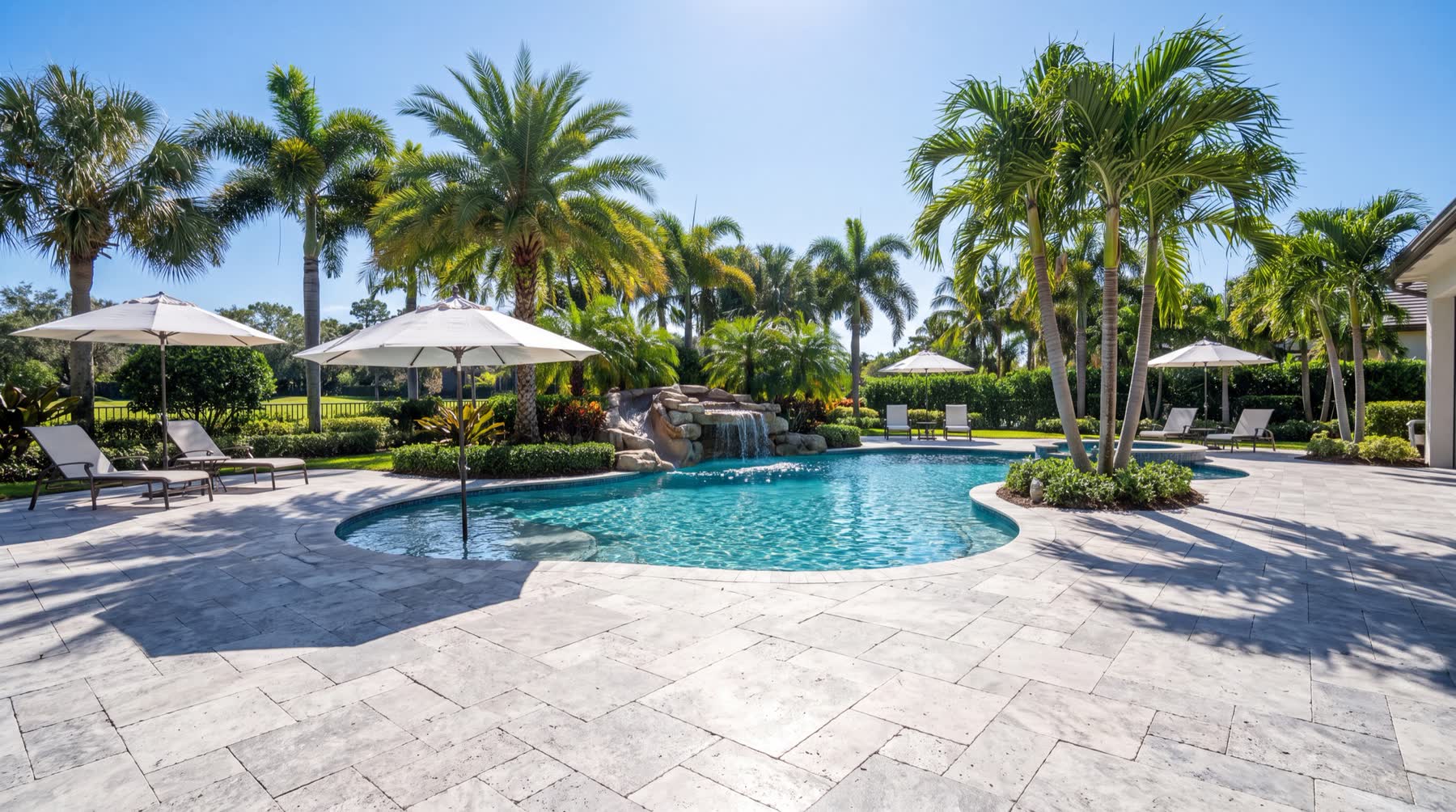
Concrete pavers and travertine around Brevard County pools — picked for bare feet, textured for the waterline, pitched to send water away from the shell.
See how we build it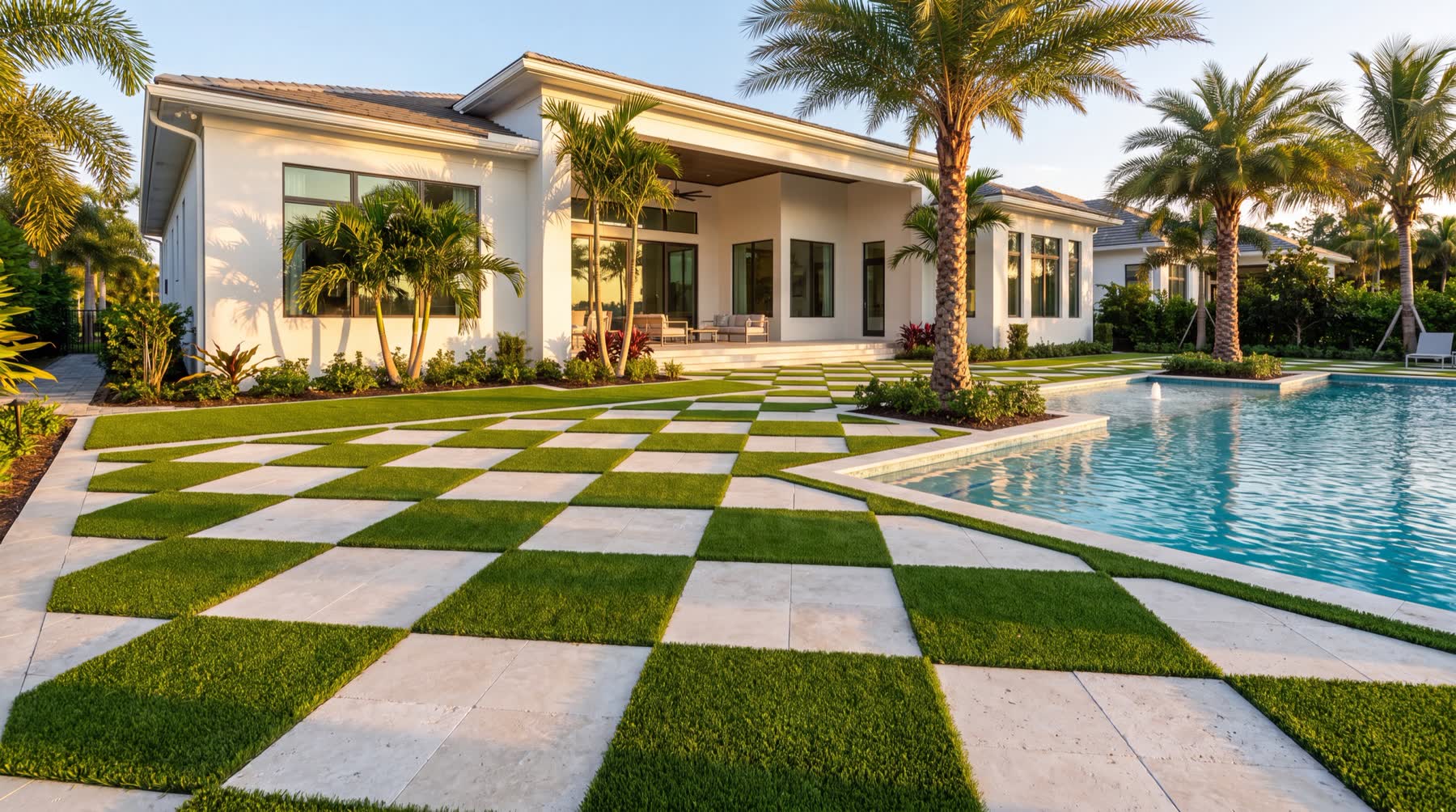
Paver patios
Curves, borders, fire-pit areas, seating walls — a patio is the one paver surface where the design is wide open.
See how we build itTravertine pavers
Travertine tends to run cooler under bare feet than concrete pavers, which is why it ends up around so many Brevard County pools.
See how we build itWhere we install
Paver installation, city by city.
Every city page covers the local conditions we actually plan around there.
North Brevard & the islands
Fastest answer
Instant quote — give us a call.
Most questions we can answer on the phone in two minutes, and if we need to see it we'll book the walkthrough while you're on the line.
(321) 586-9227Or text a photo of the space — that's often the fastest way to get a real answer. Prefer email? info@groundworkspaversandturf.com.
Free estimate
Get your paver estimate.
Tell us what you're picturing and we'll come measure it.
Five quick questions — then you're booked in and someone reaches out within 5 minutes. Prefer to talk? Call (321) 586-9227.