
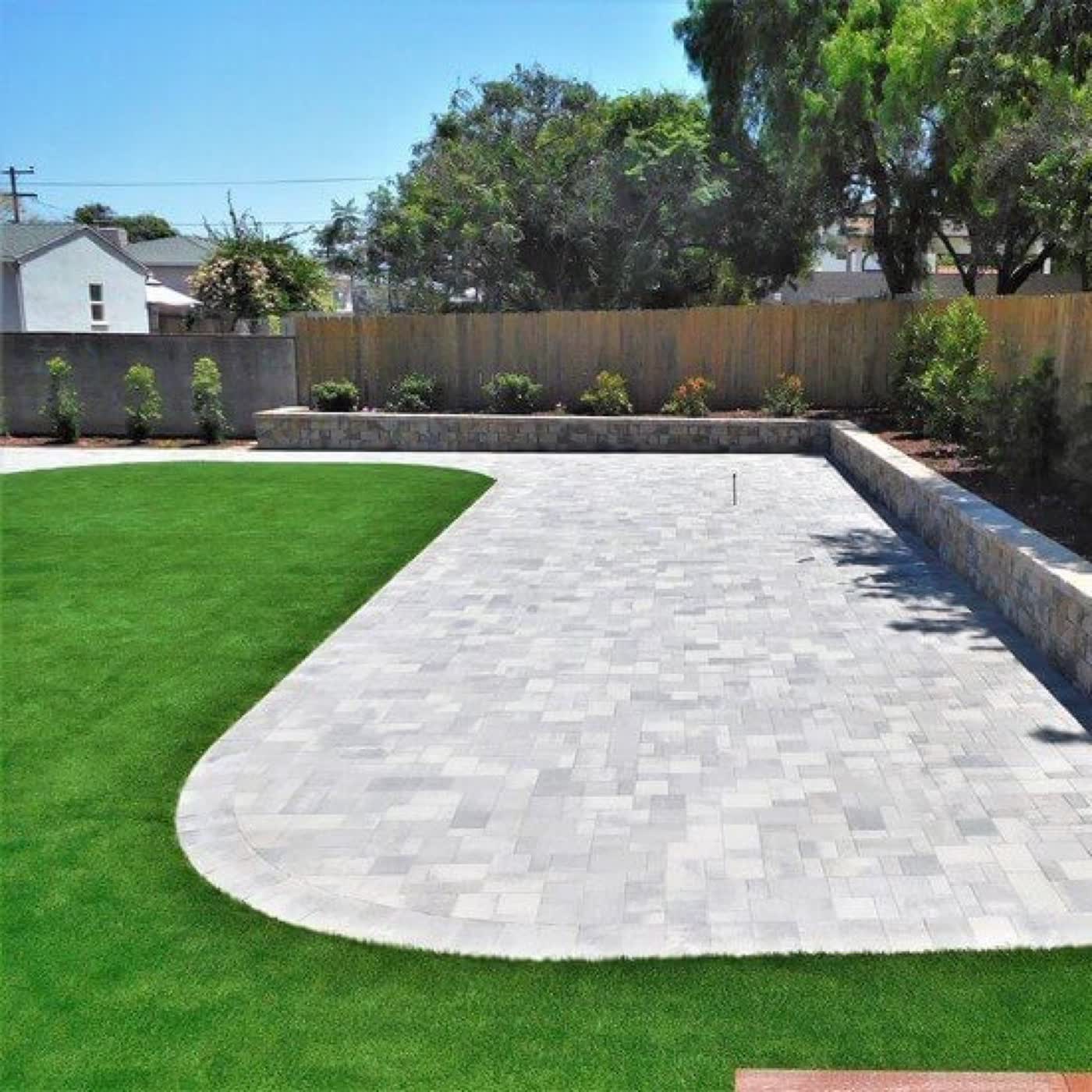
What happens next
From the first call to the final walkthrough.
Five steps, and nothing starts until you've seen it in writing.
-
Tell us what you're picturing
Call, text a photo of the space, or send the form. Rough ideas are fine — most people start with "I hate this patio" and we go from there.
-
We walk the site with you
We measure, look at where water goes when it rains, check access for equipment, and talk through materials and patterns in your actual yard instead of a showroom.
-
You get an itemized written estimate
Line by line — excavation, base, bedding, pavers, edge restraint, joint sand — so you can compare it against anyone else's and see what's actually different.
-
We handle scheduling and the paperwork trail
We'll tell you what your job needs in your municipality and who pulls it, and what your HOA will want to see if you're in a community that reviews exteriors.
-
We build it, then we clean up
Base compacted in lifts, edges locked, joints swept and set. The site gets blown down and washed off before we call it finished, and we walk it with you.
What's actually under your pavers
The seven layers that decide whether it lasts.
This is published industry practice from ICPI, the interlocking concrete pavement institute. You can check any bid against it — including ours.
1. Excavation to the right depth
How deep depends on what's going on top. Pedestrian patios and walkways need less than a driveway that will carry vehicles, and soft or organic soil has to come out rather than get compacted in place.
- Depth is set by use and by what the soil is
- Soft spots get removed, not buried
2. A compacted subgrade
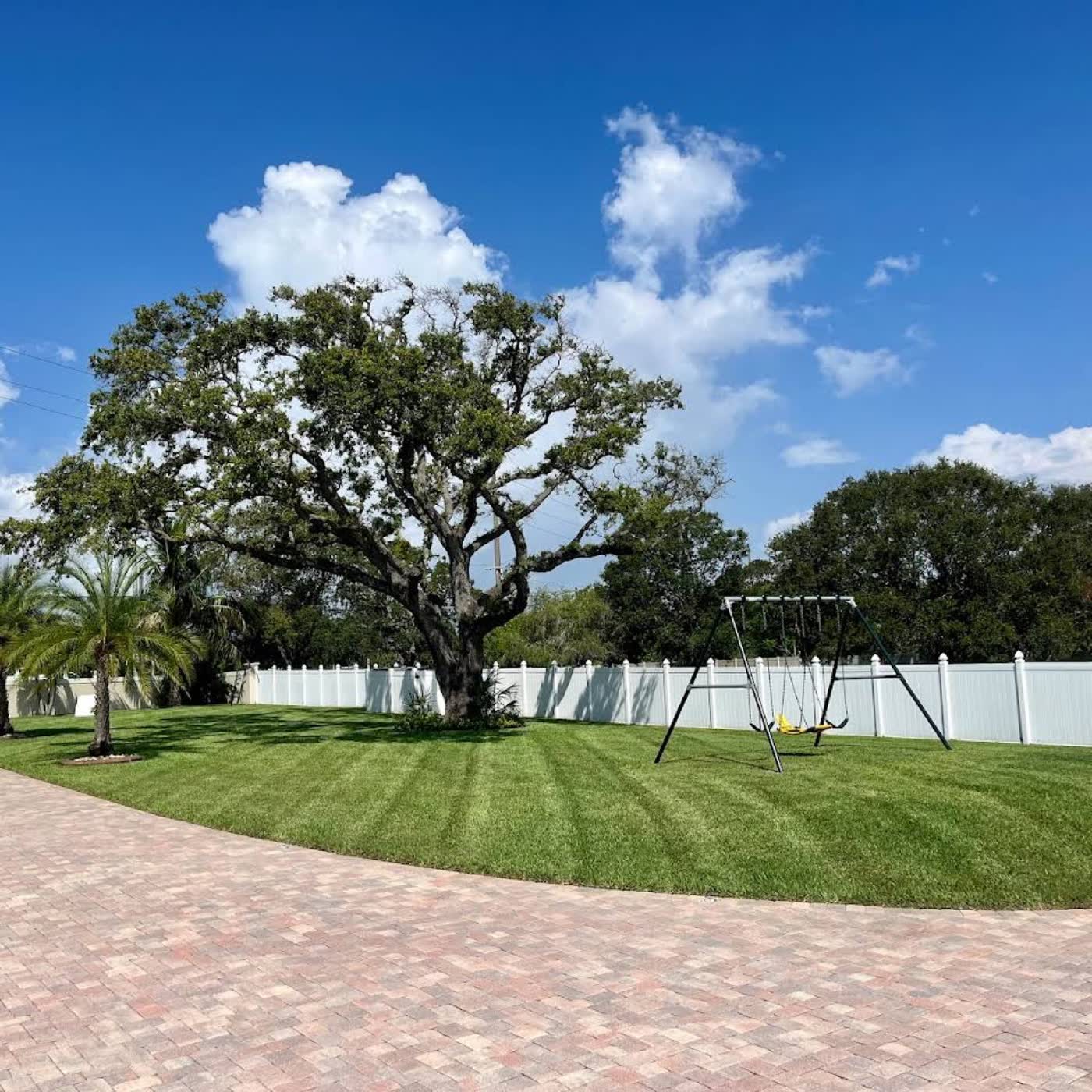
The soil under the base gets compacted before any aggregate goes down. Skip it and you have built a good base on top of something that's still going to move.
- Compacted before base material arrives
3. Geotextile where it's needed
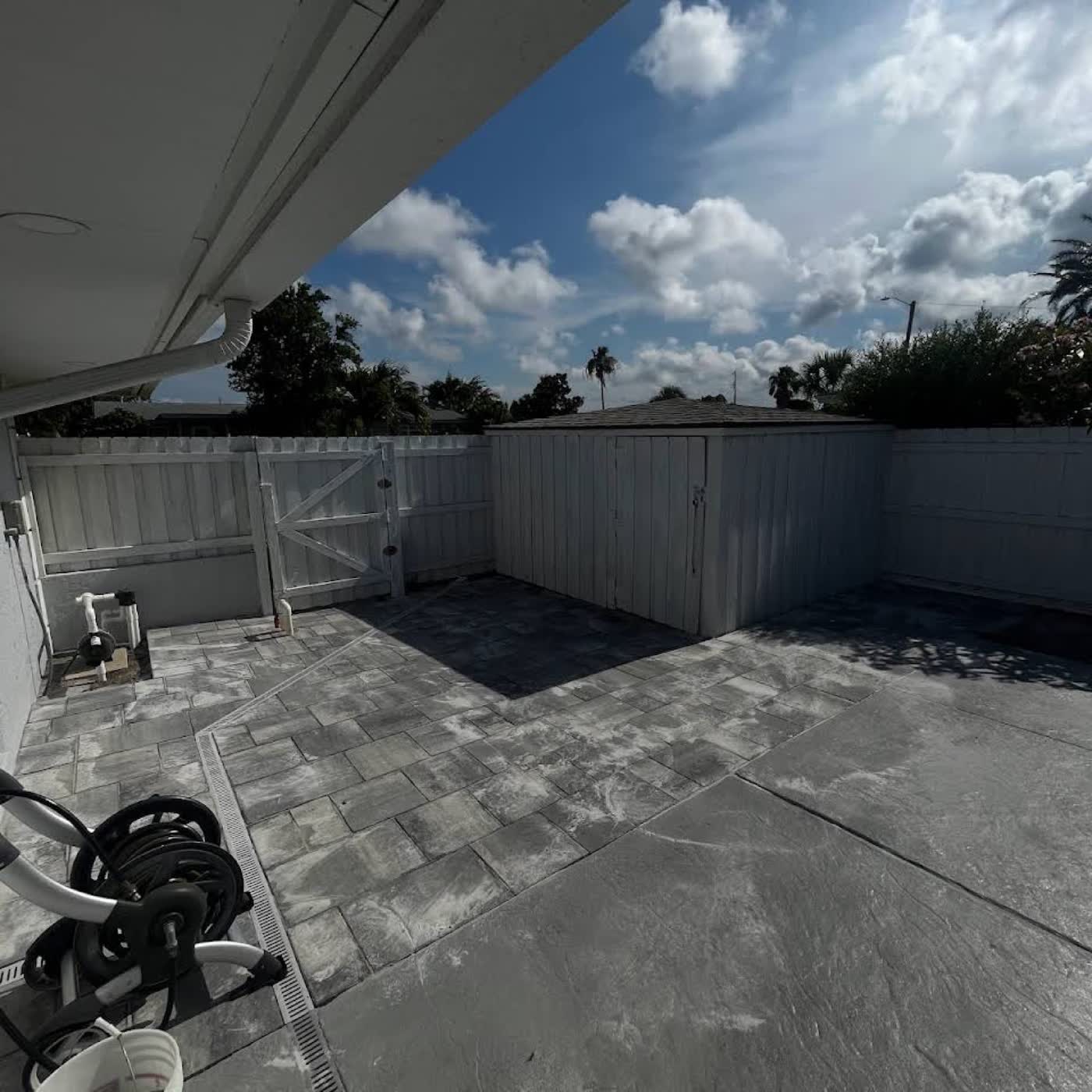
A separation fabric between subgrade and base keeps fine soil from pumping up into the aggregate over time. On Brevard's sandy and variable subgrades this is cheap insurance, not an upsell.
- Keeps base and soil from mixing
- Matters most on soft or silty ground
4. Base aggregate, compacted in lifts
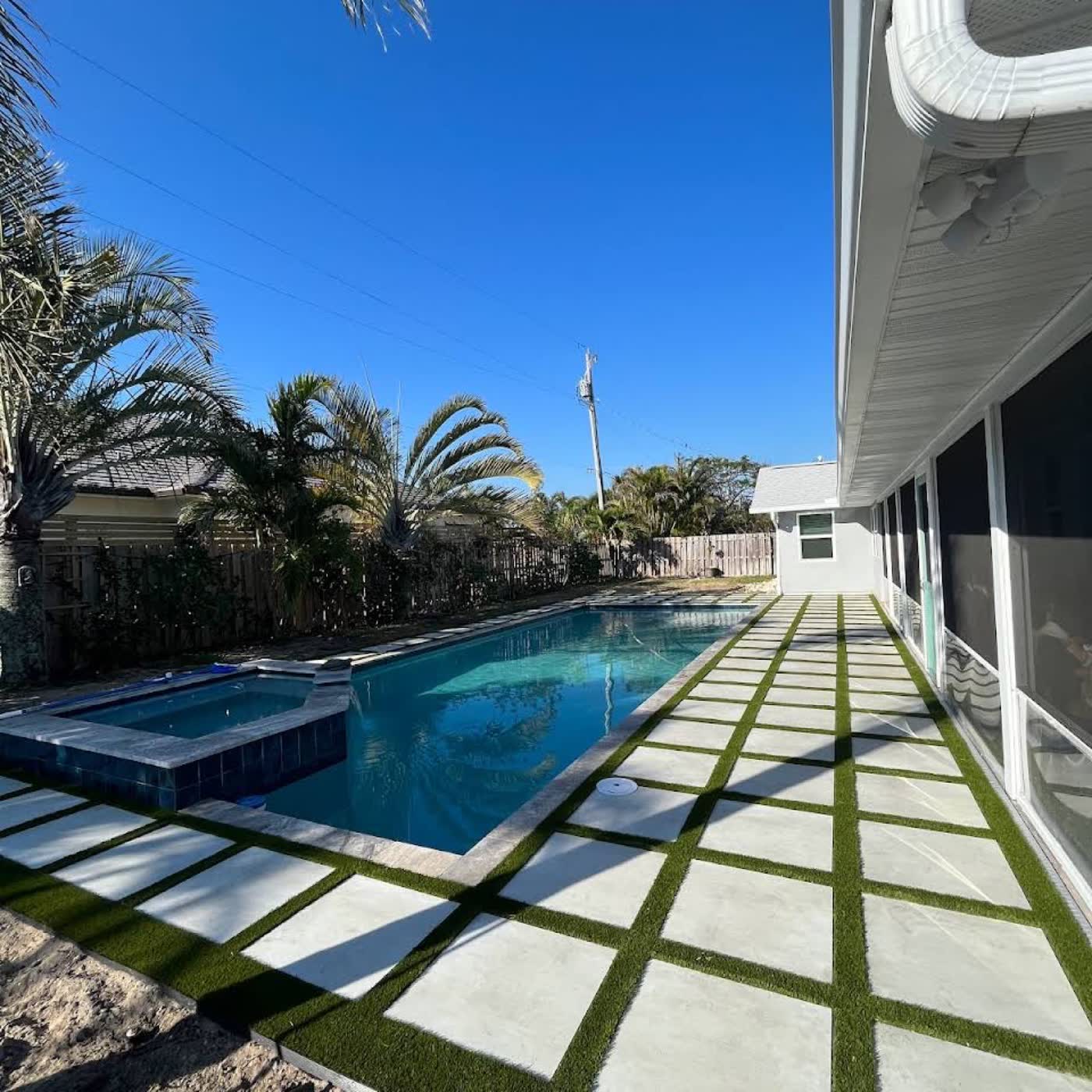
The base is the structure. It goes in and gets compacted in layers — not dumped to full depth and rolled once, which leaves the bottom half loose. Depth is greater for driveways than for patios.
- Compacted in lifts, not all at once
- Driveways get more base than patios
Free estimate
Want it walked and priced?
Free estimate, itemized in writing.
Use this on us too
Six questions to ask anyone bidding your job.
A contractor who's building it right will enjoy these questions. One who isn't isn't going to like them.
- How deep is the base, and is it different for my driveway than my patio?
- Do you compact the base in lifts, and how many?
- How thick is the bedding sand layer?
- Is the edge restraint fastened to the base or set in the sand?
- Where does the water go when it rains, and where does it end up?
- What does my municipality require for this, and who pulls it?
Ask us these on the walkthrough and we'll answer them in front of you.
Questions
What people ask before we start.
How long does a paver patio last?
A properly built paver surface is designed to be a long-term installation, and individual pavers can be lifted and reset if something ever needs attention — which is a genuine advantage over poured concrete. The lifespan is set by the base, not by the pavers.
Can you build over my existing concrete?
Sometimes, depending on the condition and the elevation it leaves you at — overlaying raises the surface, which affects door thresholds, steps and drainage. We'll look and tell you honestly whether an overlay or a tear-out is the better call for your situation.
What about tree roots?
Roots near the area get discussed before we dig. Building over a root that's going to grow is a future heave, so the answer is either routing around it, root pruning where the tree can take it, or moving the layout.
Do pavers get hot?
Lighter colors run cooler than dark ones, which is worth knowing for a pool deck you'll walk on barefoot. We'll show you samples in the sun, not just in a brochure.
Will weeds come up through them?
Weeds in a paver surface almost always grow in the joints from seed that lands on top, not up from below. Properly filled joints and periodic re-sanding are what keep it under control.
Do you only seal pavers you installed?
No — most of our sealing work is on pavers somebody else laid, and that's completely fine. If they're structurally sound we can clean, re-sand and seal them. If something underneath is failing, we'll tell you that instead of sealing over a problem.
Fastest answer
Instant quote — give us a call.
Most questions we can answer on the phone in two minutes, and if we need to see it we'll book the walkthrough while you're on the line.
(321) 586-9227Or text a photo of the space — that's often the fastest way to get a real answer. Prefer email? info@groundworkspaversandturf.com.
Free estimate
Book a walkthrough.
No charge, no obligation.
Five quick questions — then you're booked in and someone reaches out within 5 minutes. Prefer to talk? Call (321) 586-9227.