Driveways & Walkways
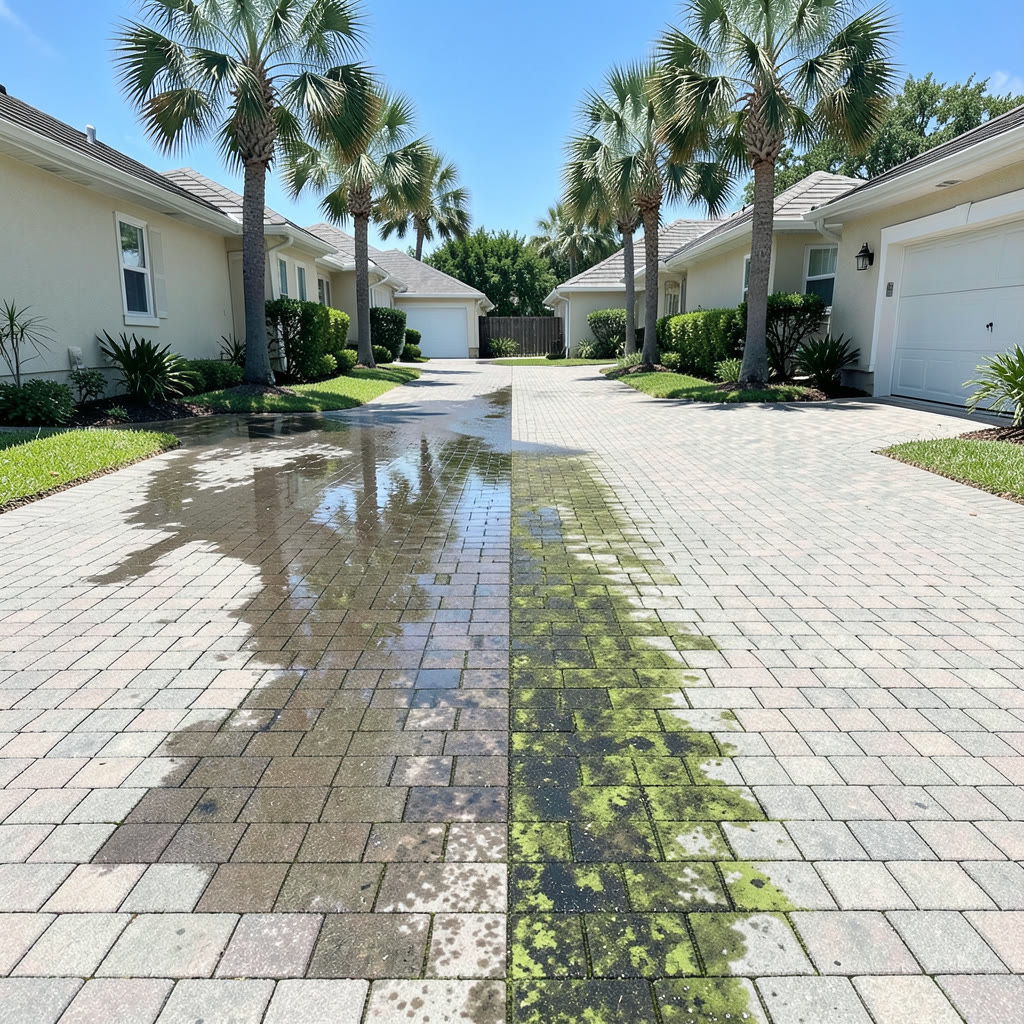
Pressure-washed flatwork that pulls wind-blown sand and salt film out of the surface texture before they have a chance to grind in with every car and footstep that crosses it.
 GROUNDWORKSPAVERS & TURF
Call now
(321) 586-9227
GROUNDWORKSPAVERS & TURF
Call now
(321) 586-9227
WIND-BLOWN SAND WEARS ON EVERY SURFACE
Pressure washing and paver cleaning for Indialantic, out on the barrier island along A1A, where wind off the water carries fine sand onto every hard surface.
Pressure washing in Indialantic
Indialantic sits out on the barrier island, and the wind off the water doesn't let up. It carries fine sand onto driveways, pool decks, and paver joints, where it settles in and grinds a little more with every car or footstep that passes over it. Add in salt film from the same wind, and concrete and pavers here dull faster than you'd expect for a house that isn't old. A wash here is doing double duty — clearing grit as much as clearing stain.
Siding and rooflines get soft-washed at low pressure — salt film on the island doesn't need to be blasted, just broken down and rinsed clear. Driveways and paver walkways get pressure-washed to pull sand and salt out of the surface texture. On pavers, that same pressure clears sand out of the joints along with the grit, so the job isn't done at the rinse. We re-sand to fill the joints back in, and sealing gives the wind-blown sand less bare stone to grind against.
What that looks like here
Pressure-washed flatwork that pulls wind-blown sand and salt film out of the surface texture before they have a chance to grind in with every car and footstep that crosses it.
Low-pressure cleaning solution on siding, soffits, and rooflines breaks down salt film without blasting the paint and caulking, which is what actually fails first on an island house.
Wind-blown sand works into paver joints and wash pressure clears it back out. We re-sand to lock the pavers in place, then seal so bare joints aren't left open to the next gust.
By the numbers
The Brevard County tax roll counts 3,345 single-family homes in Indialantic. The typical one was built in 1970, and about 90% were built before 2000.
Older homes mean older driveways, walks and pool decks, and years of mildew and irrigation staining that a garden hose will not move.
Source: Florida Department of Revenue, Brevard County 2026 preliminary tax roll.
Free estimate
We'll measure, look at where the water goes, and leave you an itemized written estimate — anywhere in Indialantic. No charge, no pressure.
Local questions
Wind-blown sand. Indialantic sits right on the barrier island, and the wind off the water keeps depositing fine sand onto every hard surface, including down into paver joints. It's not that the wash didn't work — it's that the island keeps adding more grit right after. Sealing after a wash gives the surface less for that grit to grab onto than bare, washed joints do.
It's more than dirt. Sand is abrasive, and every time a car or a foot moves across a paver joint with grit sitting in it, that grit works like light sandpaper. Over time it dulls the surface and wears the joint sand down faster than rain alone would. Washing clears it out; re-sanding and sealing slow how fast it comes back.
Both, but not with the same method. Siding, soffits, and rooflines get soft-washed at low pressure to break down salt film without damaging paint. Driveways, walkways, and paver decks can take full pressure-washing. Using pressure on the house is usually what causes the paint and caulking problems people end up blaming on the salt air.
Keep looking around
Fastest answer
Most questions we can answer on the phone in two minutes, and if we need to see it we'll book the walkthrough while you're on the line.
(321) 586-9227Or text a photo of the space — that's often the fastest way to get a real answer. Prefer email? info@groundworkspaversandturf.com.
Free estimate
Tell us what you're picturing and we'll come measure it.
Five quick questions — then you're booked in and someone reaches out within 5 minutes. Prefer to talk? Call (321) 586-9227.